
Chambers County Arrest Records and Court Charges
Chambers County arrest records start on the law-enforcement side. The arresting agency may be the Sheriff's Office, LaFayette Police, Lanett Police, Valley Police, a State Trooper, or another agency with authority in the county. The Detention Facility page confirms that the county jail houses inmates arrested by municipal police departments as well as county agencies. That means a person may have a booking or custody record before the court file has a final disposition.
Court charges after arrest are different. They begin when a complaint, warrant, indictment, information, or other charging entry is filed and tracked through court. In Chambers County, District criminal covers lower criminal matters, including cases by the Sheriff's Department and the cities of Valley, Lanett, and LaFayette. Circuit criminal covers felony-level records and other matters routed to Circuit Court. The final outcome belongs in the full Chambers County criminal court records file, not in the first arrest entry.
The Chambers County Sheriff's Office page identifies the county law-enforcement office connected to arrest and custody records.
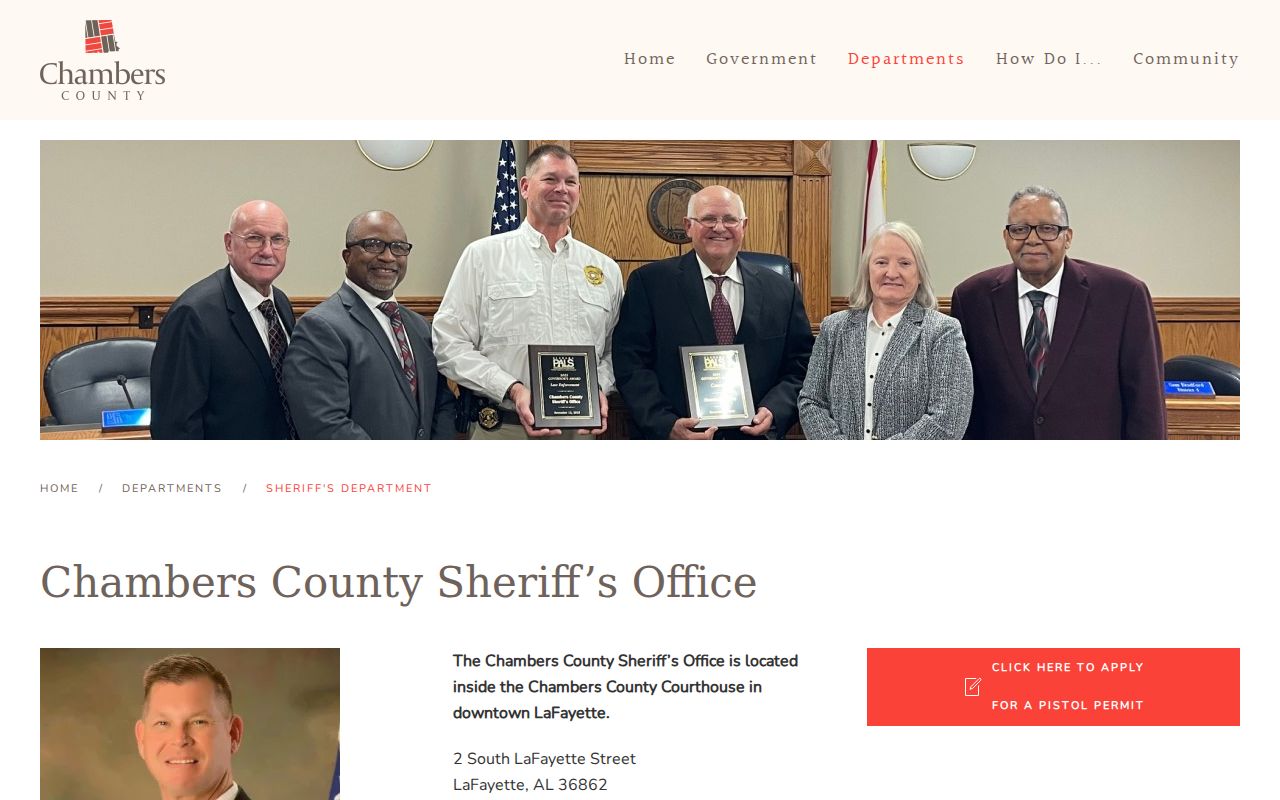
That sheriff source supports the arrest-record side, while the court charge record is read through the court and prosecutor workflow.
Find Chambers County Arrest Records
A practical search starts by deciding whether the needed fact is custody, charge filing, or final outcome. For current custody, the county detention page links to a county inmate search. During research, the linked roster returned HTTP 403 from this environment, so the official link exists but fields could not be verified. For charges and court status, use the Circuit Clerk or Alabama trial-court access channels rather than assuming a jail roster holds the full court record.
- Start with the arresting agency or detention facility if the question is whether a person is in county custody.
- Use the court case path when the question is what charges were filed after arrest.
- Check each charge line for status, not just the first listed offense.
- Contact the Circuit Clerk's criminal division for certified copies, older records, or docket entries that are not clear online.
- Use city police channels when the arrest or incident began in LaFayette, Lanett, or Valley.
For the custody-only side, the separate Chambers County inmate records page is the better place to check jail roster and detention details. For statewide prison custody after conviction and sentencing, use the Alabama Department of Corrections search, not the county jail roster.
Arrest Records vs Court Charges
An arrest record can show that law enforcement took a person into custody, but it does not prove the court accepted every suspected offense. A court charge record shows what was filed, tracked, amended, or dismissed in the judicial process. Chambers research is clear that charge records after arrest are not the same as a full criminal court case file. The full case later adds pleas, motions, hearings, grand jury action, disposition, sentence, probation, restitution, and final costs.
| Point | Arrest Record | Court Charge Record |
|---|---|---|
| Source | Sheriff, city police, detention facility, or arresting agency. | Circuit Clerk, District criminal, Circuit criminal, prosecutor, or magistrate filing path. |
| Main purpose | Shows custody, arresting agency, booking, or incident path. | Shows formal charges filed after arrest and how they move in court. |
| What it does not prove | It does not prove guilt or final court outcome. | It does not by itself show conviction unless the disposition says so. |
| Best use | Current custody, booking follow-up, or incident agency identification. | Charge status, amendment, dismissal, plea, trial setting, and case outcome tracking. |
The Chambers County Detention Facility page describes the county jail and links to the inmate search.

Custody information can help locate a person after arrest, but charge status still has to be checked against the court record.
Charges After Arrest Documents
Chambers warrant research shows why the charging document matters. Before a warrant is obtained, a person files an incident or offense report with the Sheriff's Department or the municipal police department where the offense occurred. The officer or deputy enters a warrant request. A magistrate then places the complainant under oath, asks probable-cause questions, and decides whether a complaint and deposition support a warrant. Other criminal cases may proceed by prosecutor filing or grand jury action depending on the offense and court level.
| Document | Who Creates It | How It Fits Chambers County Charges |
|---|---|---|
| Complaint | Complainant, officer, magistrate, or prosecutor process depending on the matter. | May support a warrant or start a lower criminal charge after probable-cause review. |
| Information | Prosecutor. | May be used when the prosecutor files formal charges without a grand-jury indictment in a qualifying matter. |
| Indictment | Grand jury. | Commonly tied to felony-level Circuit Court prosecution when a grand jury returns a true bill. |
Not every charging path is public at the same time. Chambers' local warrant instructions state that an arrest warrant is not a public record until it is served. That rule is central when the case starts with a warrant request rather than a public docket entry.
Chambers County Charge Status
Charge status is the most important part of a court charge lookup. A single arrest can lead to several counts. One charge may be dismissed, another may be amended, and another may end in a plea. The words in the disposition and docket event history matter more than the first charge title. Chambers court records can include complaint, warrant, indictment or information, plea, bond, motions, disposition, sentencing order, fines and costs, probation terms, and appeal entries.
| Status | What It Means |
|---|---|
| Pending | The charge is still open or has not reached a final disposition in the visible record. |
| Amended | The original charge was changed, often because facts, plea terms, or prosecutor action changed the accusation. |
| Reduced | The charge was lowered to a different offense level or less serious offense in the court record. |
| Dismissed | The court record shows the charge ended without a conviction on that charge. |
| Nolle prossed | The prosecutor dropped the charge. The research glossary defines this as nolle prossed. |
| No bill | The grand jury declined to indict, so the felony charge did not proceed by indictment. |
Note: A charge name alone is not enough because Chambers County records may show later action that changes the legal result.
Charges vs Convictions
Being charged after arrest is not the same as being convicted. A charge can be based on probable cause, a complaint, a warrant, prosecutor review, or grand-jury action. A conviction requires a guilty plea, a verdict, or another valid adjudication accepted by the court. Arrest records and charges after arrest must be read with this distinction in mind because public search results can list accusations that did not result in guilt.
| Point | Charge | Conviction |
|---|---|---|
| Record stage | Early or mid-case accusation. | Final or near-final case outcome. |
| Meaning | Shows what the state alleged. | Shows the court accepted or found guilt on a charge. |
| Where to verify | Charge list, complaint, indictment, warrant, or docket event. | Disposition, sentencing order, probation entries, and appeal history. |
| Public reading | Do not treat it as proof of guilt. | Check later sealing, appeal, or expungement status before relying on it. |
State and Jail Charge Lookups
State systems answer different questions than Chambers County arrest records. The Alabama Department of Corrections inmate search is for currently incarcerated state prisoners, not county jail detainees. A person arrested in Chambers County may appear first in the county jail roster, then in court records, and only later in ADOC if convicted, sentenced, and transferred to state custody. Conversely, a person in ADOC may no longer appear in the county jail.
The ALEA community sex offender registry is also separate from the court charge record. It can be a law-enforcement public-safety search, but it is not a county criminal docket or proof that a recent arrest occurred. Use the registry only for its own purpose and use court records for the actual charge and disposition history.
The state prison lookup is available from the Alabama Department of Corrections inmate search.
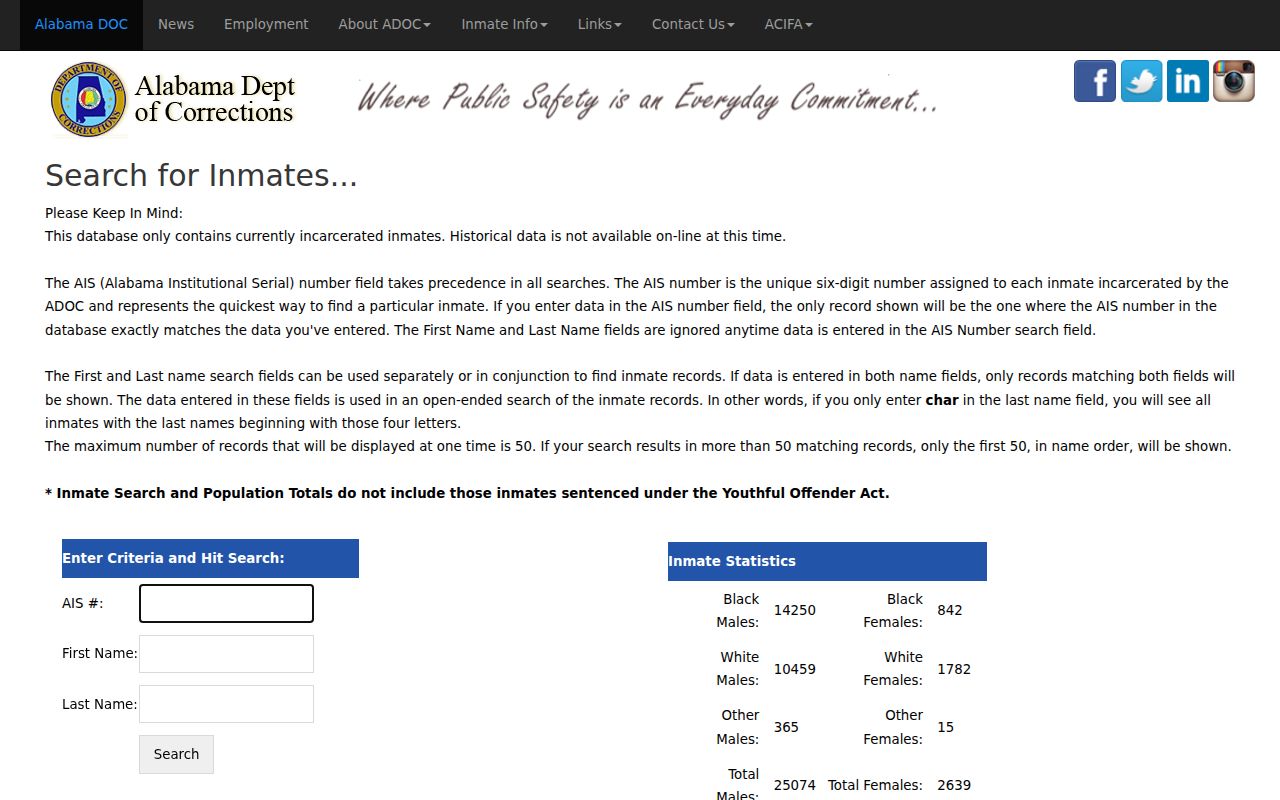
ADOC search results may follow a conviction and transfer, so they do not replace the county arrest or court charge record.
Chambers County Sheriff App
The Chambers County Sheriff's Office promotes a mobile app. The Google Play listing for Chambers County Sheriff AL says residents can connect with the Sheriff's Office by reporting crimes, submitting tips, and using other interactive features, and that the app provides public-safety news and information. The listing does not confirm an app-only warrant lookup or a mugshot database, so the safer record path remains the official detention, court, sheriff, and city police channels.
The Chambers County Sheriff AL app listing describes reporting, tips, alerts, and public-safety information.
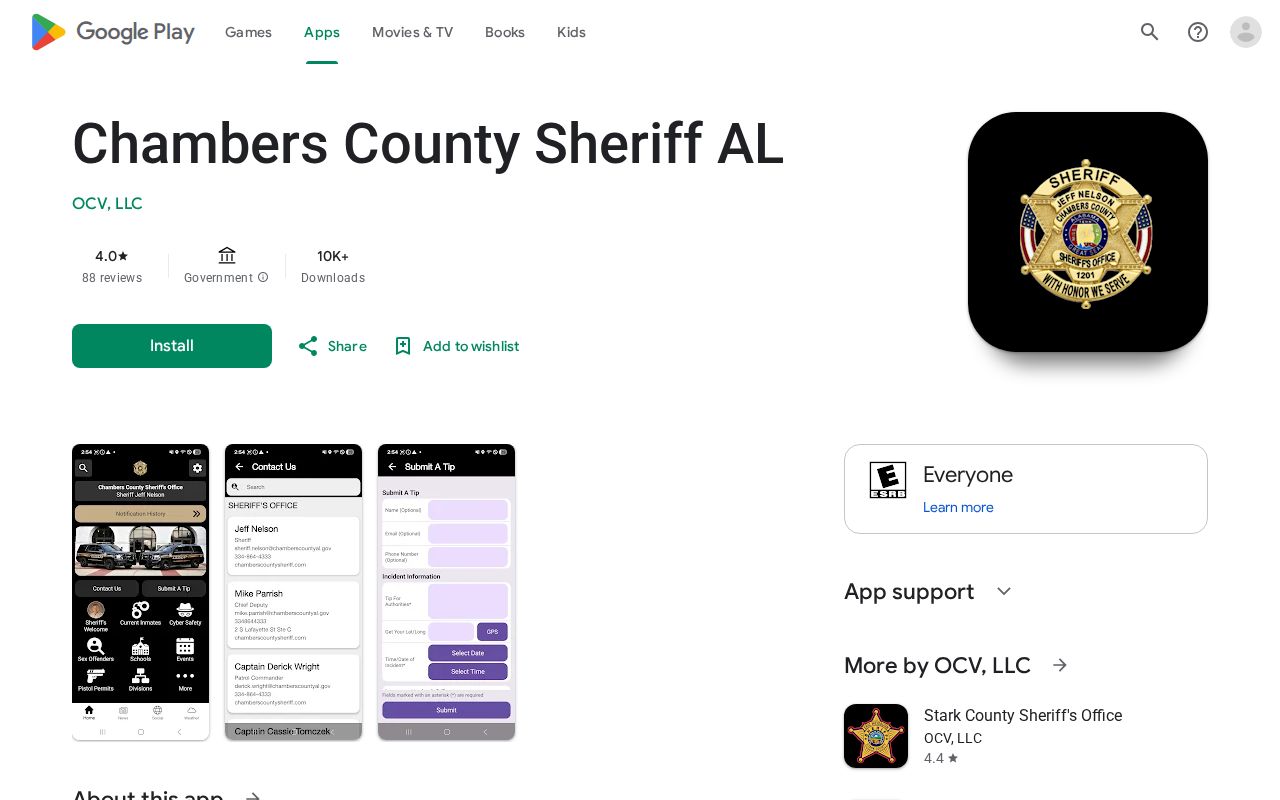
The app may be useful for public-safety contact, but court charges after arrest still need to be verified through the official case record.
Restricted Chambers County Charge Records
Some arrest and charge information is restricted. Juvenile legal and law-enforcement records are confidential under Alabama Code § 12-15-133. Unserved Chambers County arrest warrants are not public records. PFA court records can have home, work, phone, and related safety information deleted from the court record by order. Sealed and expunged records may not appear in ordinary public searches even when limited court, law-enforcement, prosecutor, or statutory access remains.
Expungement in Chambers County is handled through the criminal division of Circuit Court in the county where the charge was filed. Local research points to AOC Form CR-65, certified arrest or disposition records, a certified ALEA criminal record, agency service, and possible objections or hearings. A dismissed charge may still require the proper petition and order before public access changes.
Important: Arrest records and charge entries are not FCRA consumer reports and should be verified with the originating office.